For many people in the UK, learning to drive has traditionally been something that you would look forward to when turning 17 or 18. This has culturally been something that young people felt like they needed to do as part of transitioning into adulthood. Despite this previously, the reality of the age of when people are learning to drive, is slowly changing.
Over the past decade, wider societal changes, economic uncertainties and the disruption caused by the COVID-19 pandemic have all had an impact on how and when people choose to learn to drive. Other parts of life that would also have traditionally began in early adulthood such as starting careers, building a family and buying property also appear to be pushed back a few years, so it is no surprise that learning to drive has followed a similar pattern.
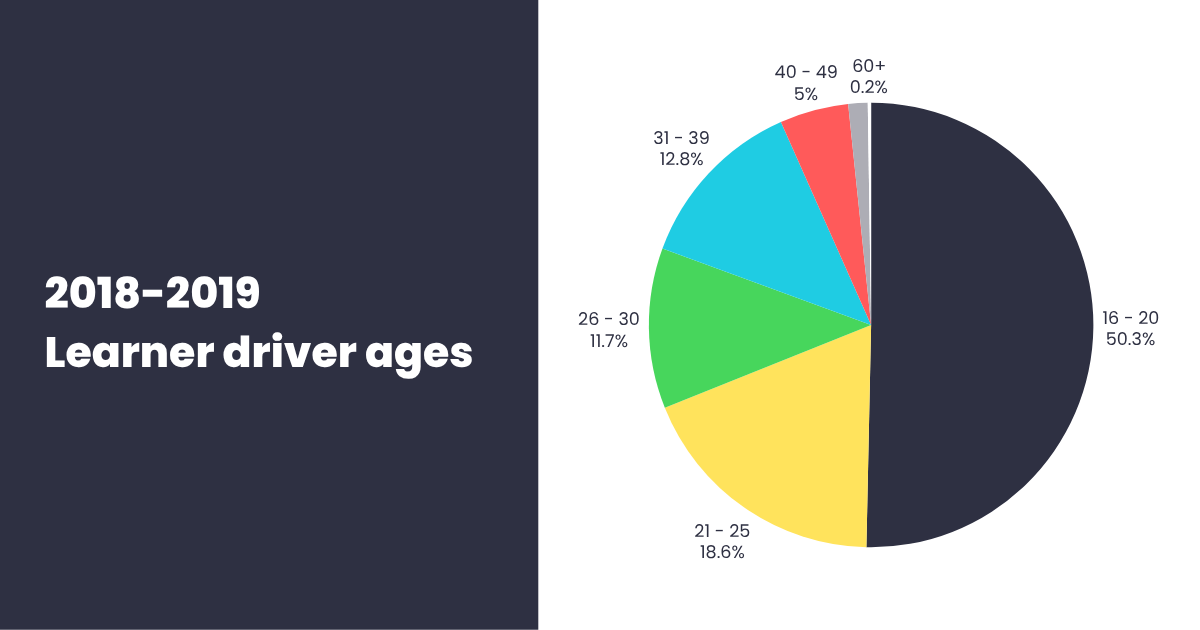
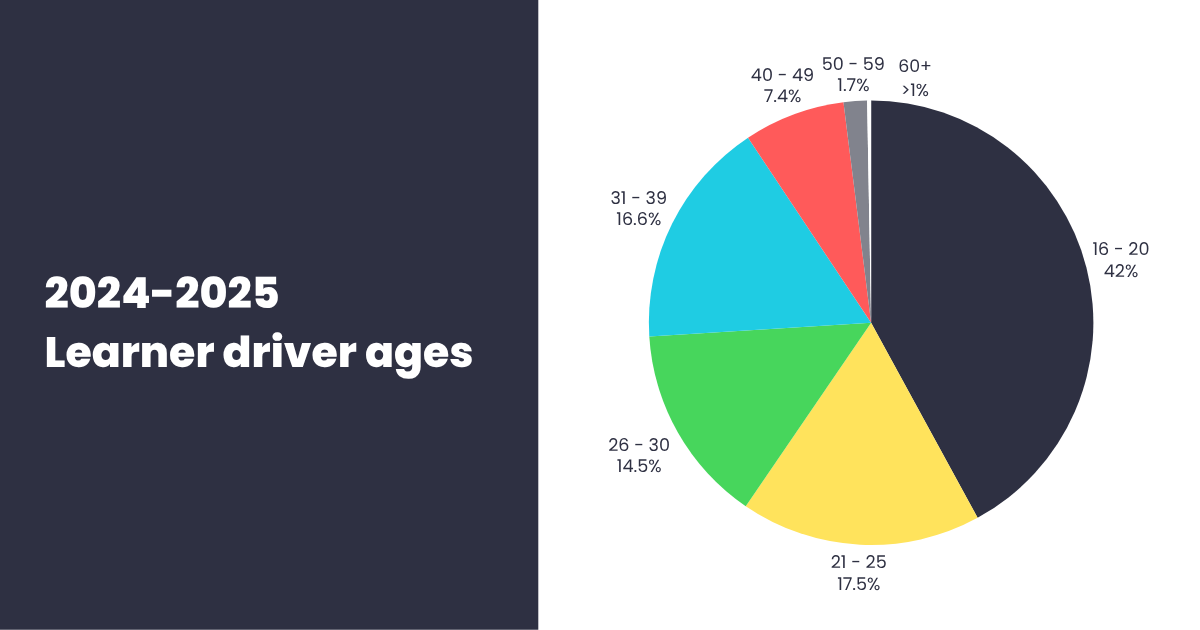
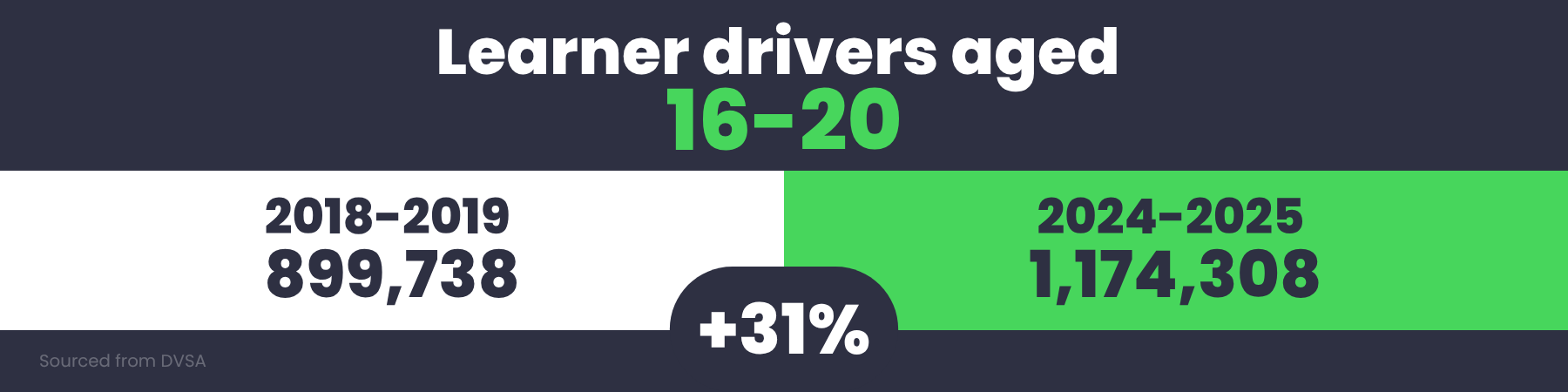
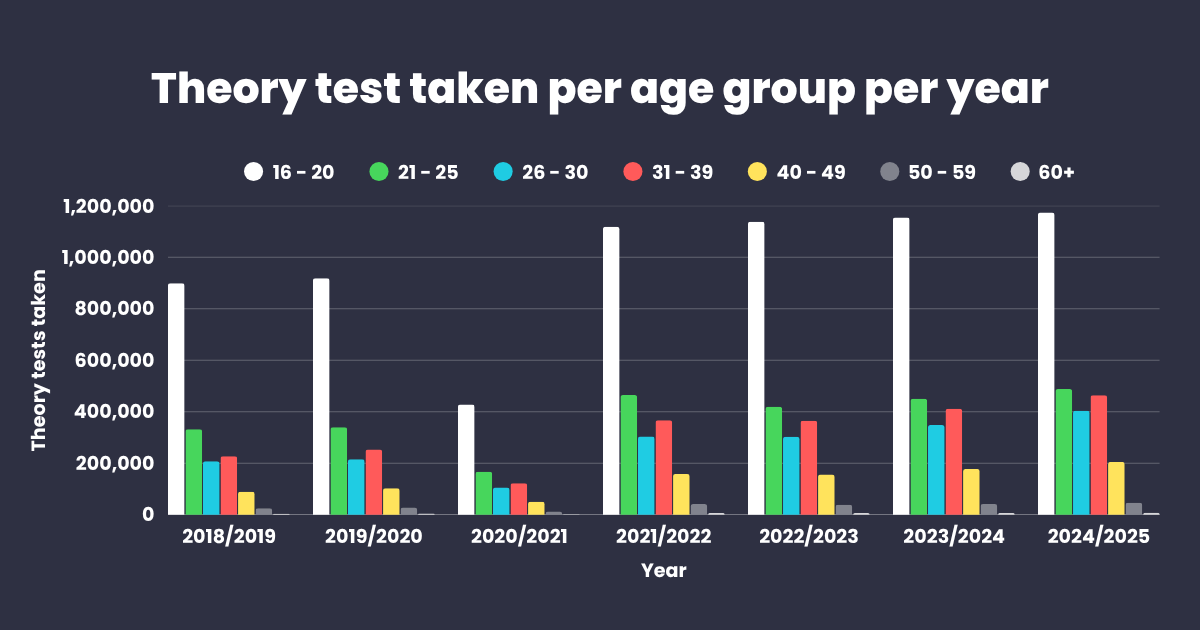
DVSA theory test data from 2018/19 through 2024/25, shows younger learners still dominate the learner driver market. However, their share of the total has gradually declined, while older learner groups have grown.
In 2018/19, drivers aged 16–20 accounted for just over 50% of all theory tests taken.
By 2024/25, that figure had fallen to just over 40%.
This does not mean younger people have stopped learning to drive. In fact, the number of theory tests taken by 16–20 year olds has increased over time. What this shows is their share of the total market has declined as older age groups have entered the learner driver market in greater numbers.
Learning to drive in your twenties is becoming more common
The most noticeable growth comes from drivers in their twenties, including early, mid and late twenties.
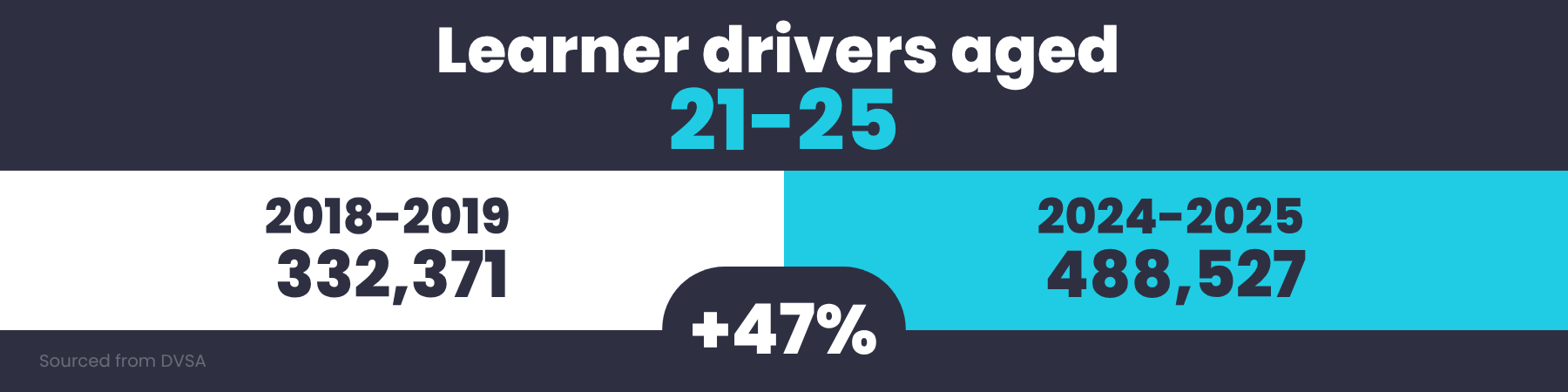
The 21–25 age group has grown steadily across the last few years, consistently representing the second largest group of theory test candidates.
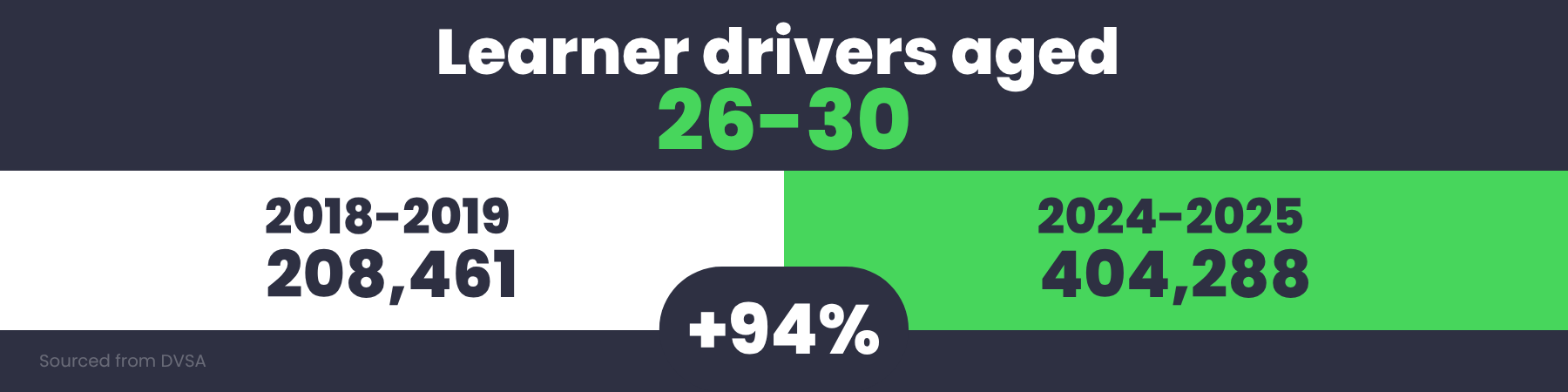
Similarly, we have seen a significant increase in drivers aged 26–30. Compared with pre-COVID levels, the number of theory tests taken by this group has increased dramatically.
Meanwhile, the growth seen among 16–20 year olds has been more gradual.
This suggests that while younger learners still form the core of the market, a growing proportion of people are learning to drive later in life.
Growth among older learners
The trend does not stop with people in their twenties.
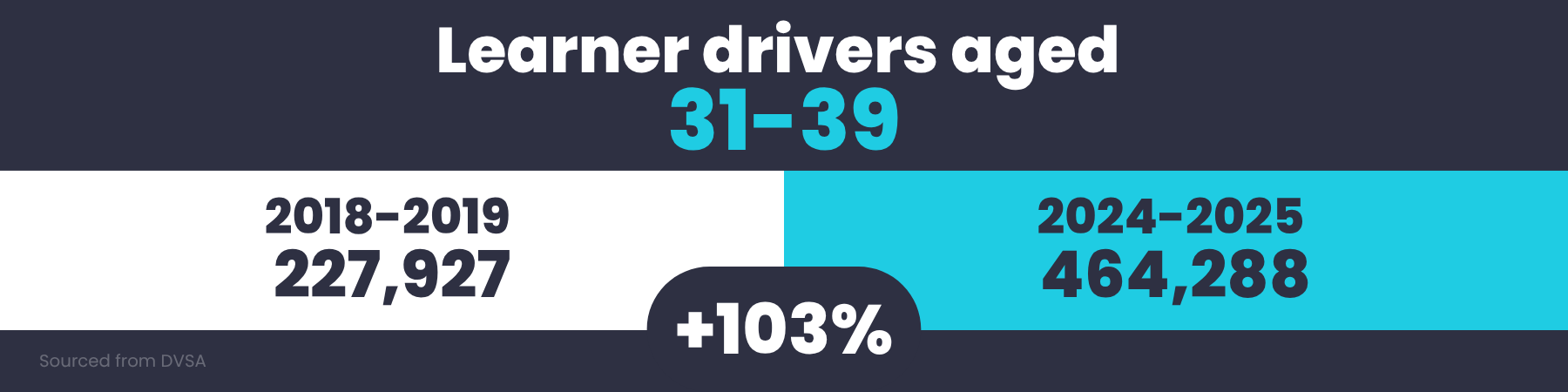
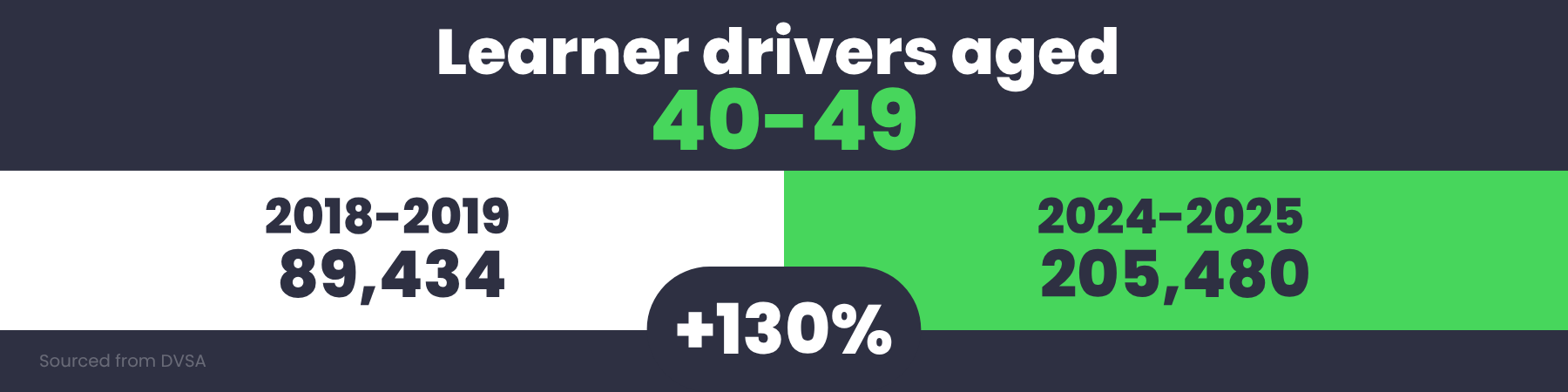
Across the DVSA theory test data, there has also been noticeable growth among learners aged 31–39 and 40–49.
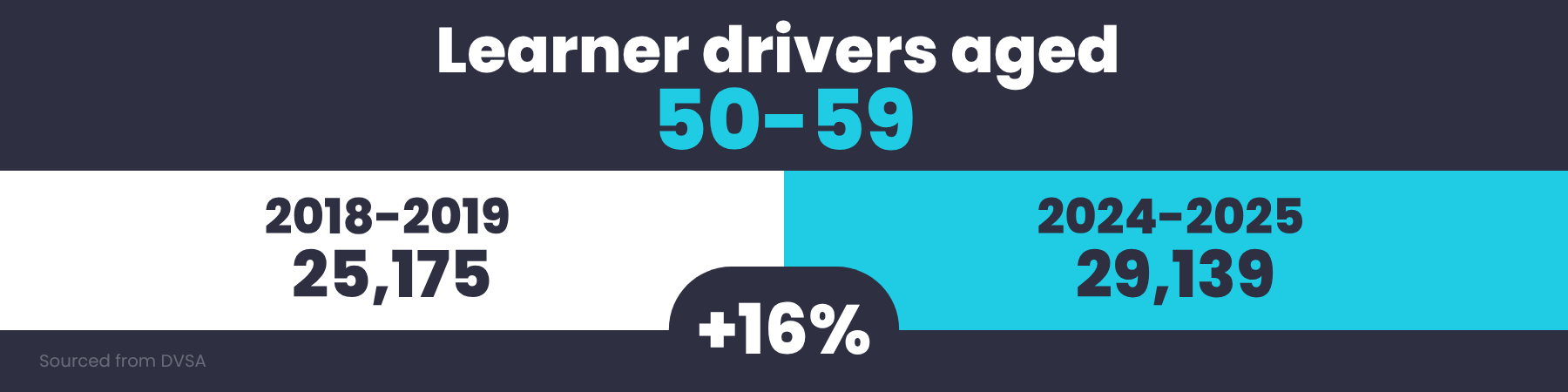
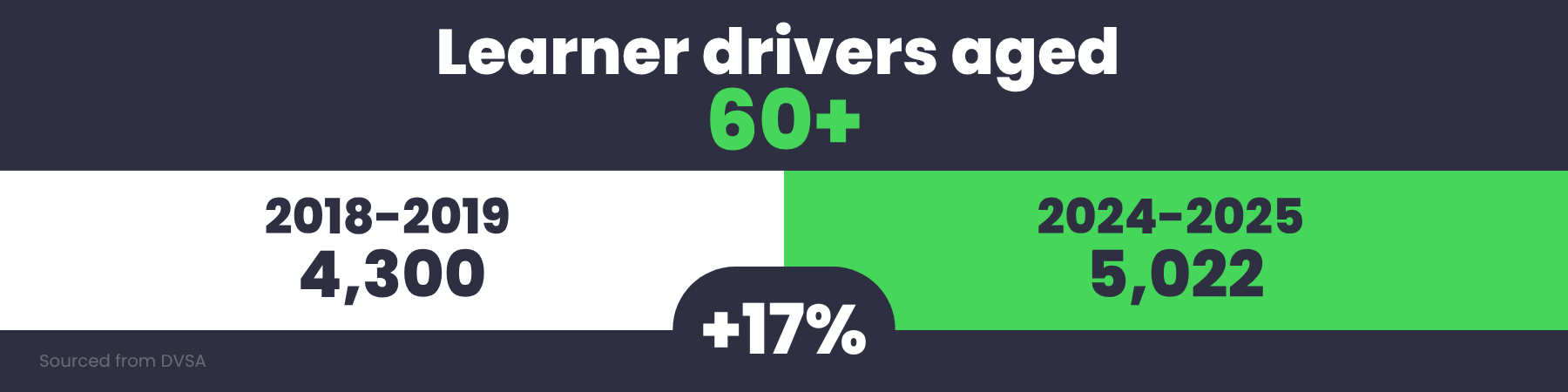
While these groups remain smaller in absolute terms compared to younger learners, they are clearly becoming a larger part of the overall learner driver population. Even among drivers aged 50 and over, the number of theory tests has risen over time.
Taken together, the data suggests that learning to drive is no longer something confined primarily to teenagers and/or young adults.
DVSA Data Conclusion
The number of people learning to drive is growing significantly. The total of theory tests taken has increased significantly since the disruption caused by the pandemic. In 2018-2019, 1,787,406 theory tests were taken across all age groups. In 2024-2025, 2,792,839 were taken, representing a 56% increase.
While younger drivers still represent the largest group taking theory tests, the fastest growth is clearly coming from older learner groups, particularly those in their twenties and thirties. This means that the average age of someone entering the learner driver journey is gradually increasing, even though younger learners remain the dominant group for now.
What Are We Seeing in Collingwood’s Data?
The broader trend across both sets of data is that learning to drive is becoming more age-diverse. Within our own customer data, the largest group of learners remains those aged 17–20, which aligns closely with the DVSA data. We’re also seeing increased interest from learners in their twenties and thirties, a further trend that supports the DVSA stats.
What Could Be Driving the Shift?
There are many reasons why more people are learning to drive at a later stage in life:
Longer waiting times for driving tests: Since the pandemic, driving test backlogs have remained high. In some areas, learners face months-long waits for practical tests, which may discourage some people from starting learning to drive at 17.
Offers and more direct to your inbox!
Sign up today for exclusive offers, practical guidance, driving tips, and more!
Conclusion
Based on DVSA theory test data, supported by our own internal observations, learners do appear to be starting slightly later in life. Younger drivers still make up the largest share of learners, but older groups are growing faster, making the overall learner population more age‑diverse than it has been in recent years.
Learning to drive is no longer something that happens at just one point in life. Instead, it is increasingly something that people choose to do whenever it fits their circumstances. 17 year-olds may still dominate the learner driver market, however they are no longer the only ones getting behind the wheel for the first time.