Home / Blogs / Do You Need Qualifications to Be a Driving Instructor?
Do You Need Qualifications to Be a Driving Instructor?
Share :
If you are thinking about becoming a driving instructor in the UK, you might be wondering, whether you actually need qualifications to become a driving instructor. Teaching learner drivers is a serious responsibility, so there are legal requirements and formal steps you must complete before you can charge for lessons as an Approved Driving Instructor. In this blog, we’ll discuss the requirements for becoming a driving instructor, the qualifications needed, the three-part exam, how to register as an ADI, and some additional considerations you might not have thought about.
What Is Needed To Become A Driving Instructor?
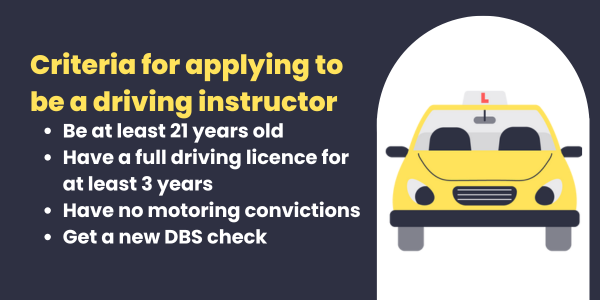
If you want to legally charge for driving lessons, you must be a fully qualified ADI. To become an ADI, you need tosatisfy a set of eligibility criteria*, complete three government-administered exams, pass a background check, and register with the DVSA. Once you have successfully completed these steps, you can legally teach and earn money as a driving instructor.
Training / preparation – While not strictly a “qualification” as such, many prospective instructors take a training course from a DVSA-registered trainer (ORDIT) to prepare for the ADI exams.
The Three-Part Exam
To earn your ADI qualification, you must pass a three-part exam. Each part tests a different skill set: 1. ADI Part 1 – Theory Test This is a written exam focused on driving theory, road rules, hazard perception, and the national standard for driver training. 2. ADI Part 2 – Driving Ability Test This practical test assesses your driving skills to ensure you can confidently and safely control a vehicle under test conditions. You have only have three attempts to pass this part of the exam. If you do not pass, you will have to pay again to book another test. 3. ADI Part 3 – Instructional Ability Test This is where you demonstrate your competence in teaching. You will give a lesson to a pupil while under assessment, showing you understand how to instruct, communicate, and manage a learner. You will need a pupil, a suitable car, your licence (or trainee licence), and a log of your training. You must pass all three parts within two years of passing Part 1, otherwise you will need to restart the process.
Training provider – Many new instructors find it valuable to work with a trainer from the ORDIT (Official Register of Driving Instructor Training). ORDIT is a voluntary scheme which is ran by the DVSA with the aim of raising the standards of ADI training, in line with national standards.
Insurance & costs – Start-up costs (training, test fees, licence, DBS), as well as ongoing costs like insurance, car maintenance, and marketing.
Conclusion
To be a driving instructor in the UK you absolutely need to pass the three-part exam, and satisfy eligibility and background checks. It is not always quick path, but it is structured to ensure that instructors are capable, safe, and professional. Whether you decide to train independently or through a school, once qualified, you will be well-placed to begin a rewarding career teaching learner drivers.
FAQs
Commonly asked questions about driving instructor qualifications
You need to complete all three parts within two years of passing Part 1; if you do not, you will need to start over.
Yes, once you pass Part 2, you can apply for a trainee instructor licence, which allows you to teach for up to six months while preparing for Part 3.
Yes, you must pass a Disclosure and Barring Service (DBS) check as part of your application to confirm you are a “fit and proper” person.