Home / Blogs / Understanding Parking Sensors: How Do They Work and What Are Their Benefits?
Understanding Parking Sensors: How Do They Work and What Are Their Benefits?
Share :
For learner drivers and those new to the road, parking can often be one of the most nerve-wracking aspects of driving. Whether it’s parallel parking on a busy street or reversing into a tight bay in a car park, it can be challenging to judge distances from other vehicles and obstructions accurately, particularly when you’re still gaining confidence behind the wheel. Fortunately, advances in car parking technology are making things much easier for vehicle users with the introduction of parking sensors.
One feature that’s become increasingly common is the parking sensor. Once considered a rarity only seen in brand new and/or high-end vehicles, parking sensor kits are now widely available, including as aftermarket options which can be installed. But what exactly is a parking sensor in a car? How do these devices work, and why are they becoming essential for all types of drivers? In this blog, we’ll take an in-depth look into what parking sensors are, how they work and what are what the benefits of parking sensors are.
What Are Parking Sensors?
A parking sensor, sometimes referred to as a “park assist”, is a proximity sensor designed to assist drivers in manoeuvring and parking their vehicle. Typically installed in the front and/or rear bumpers, parking sensors use ultrasonic or electromagnetic technology to detect obstacles around your car. They alert you through a series of beeps or visual indicators, helping you avoid colliding with other vehicles and obstacles while parking.
One of the main benefits of parking sensor for cars lies in its simplicity. For inexperienced or less confident drivers, these devices act as an extra set of eyes (or ears), offering reassurance when squeezing into tight spots or navigating unfamiliar environments. Whether you’re reversing out of a driveway or nudging forward into a compact bay, sensors can help make the process safer and more manageable.
In many modern vehicles, parking sensors are now included as standard equipment, particularly on newer models where driver assistance systems are becoming more advanced. For learner drivers practising essential manoeuvres, having this added support can make a noticeable difference in both confidence and safety. If your car doesn’t come with parking sensors as standard, you can buy a sensor kit separately, with professional or DIY sensor installation options available. Please note that this would be classed as a modification which could impact car insurance.
What Do Parking Sensors Look Like?
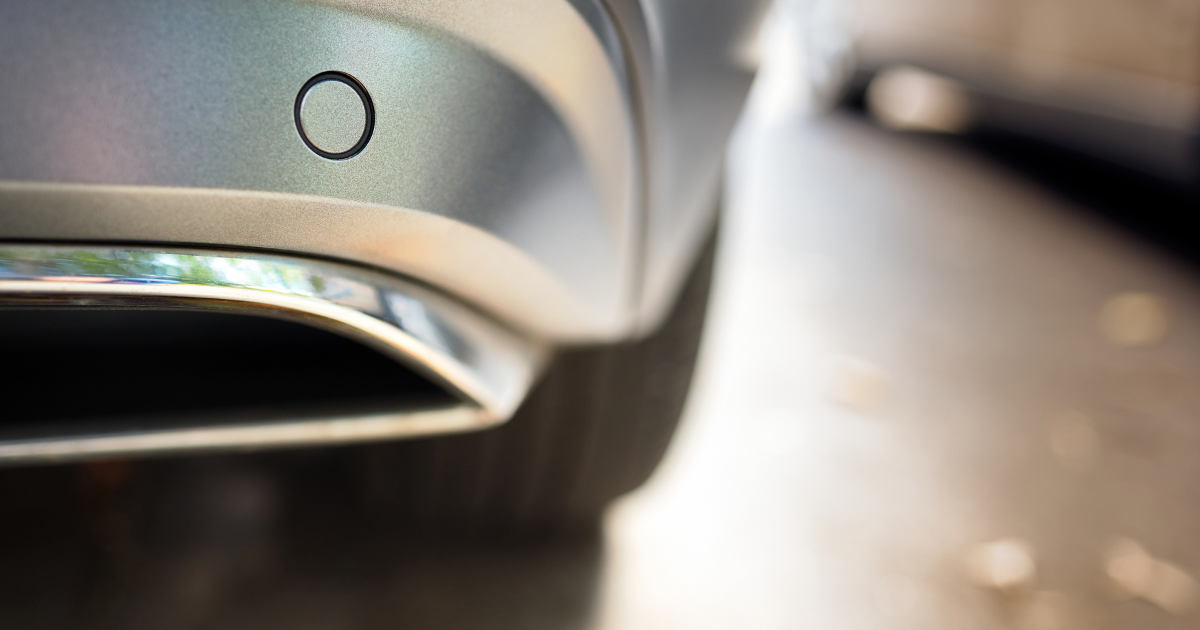
If you are wondering what parking sensors look like, they are usually small, circular discs embedded into your car’s bumper. They are often coloured to match the vehicle’s paintwork, making them discreet and easy to miss at first glance.
On most cars, you will notice two to four sensors spaced evenly across the rear bumper, and sometimes along the front bumper too. Inside the vehicle, you may also see a small display on the dashboard or infotainment screen that visually represents how close you are to an object. Aftermarket parking sensors may appear slightly more visible depending on installation, but many kits are designed to blend in seamlessly for a factory-fitted look.
How Do They Work?
Parking sensors operate using either ultrasonic or electromagnetic signals to detect obstacles in the surrounding environment. This can range from a wall, to other vehicles or even people walking behind your car. When you put your car in reverse—or sometimes when moving forward slowly—the sensors activate and begin scanning the area around your bumper.
Here’s how parking sensor installation and functionality work in practice:
Ultrasonic Sensors: Emit high-frequency sound waves. When these waves hit an object, they bounce back to the sensor, which calculates the distance based on how long it takes for the sound to return.
Electromagnetic Sensors: Generate an electromagnetic field around the bumper area. When an object disrupts this field, the system alerts the driver.
Visual Alerts: Many systems also include dashboard displays showing how close you are to an object, using colour-coded lights or digital readouts.
Auditory Alerts: The frequency of beeping increases as your car gets closer to an obstacle, warning you when it’s time to stop.
The process is largely automatic and as soon as the reverse gear is engaged, the system activates without any extra input from the driver. The sensors constantly measure distance in real time, adjusting the speed of the warning beeps to reflect how close you are to a potential obstruction.
Some advanced systems are integrated with reversing cameras or automatic parking assistance, providing an even clearer picture of your surroundings. However, even basic parking sensors can significantly reduce the likelihood of low-speed bumps and scrapes.
What Do Parking Sensors Do?
Parking sensors detect nearby obstacles and warn you before you collide with them. Their role is preventative with the aim of helping you avoid minor collisions that commonly happen at low speeds.
More specifically, parking sensors can:
Alert you to objects below your line of sight, such as low bollards or short posts.
Help you judge distance more accurately when reversing or edging forward.
Provide audible and sometimes visual feedback to support safe manoeuvres.
Reduce the risk of minor cosmetic damage to your vehicle.
While they do not take control of the car, they act as an early warning system which can be particularly useful in busy car parks, residential streets, or tight urban spaces.
Types of Parking Sensors at a Glance
When choosing a parking sensor kit, it helps to understand the differences between the main types available. Below is a quick comparison to support your decision:
Type
How They Detect Objects
Commonly Used On
Ultrasonic Sensors
Use sound waves that bounce off objects to measure distance.
Most factory-fitted systems and aftermarket kits.
Electromagnetic Sensors
Create a magnetic field around the bumper that detects disruptions.
Aftermarket installations and discreet setups.
What Are Their Benefits?
While many experienced drivers may take car parking tech for granted, parking sensors can significantly enhance safety and convenience, especially for learner drivers or those lacking in confidence behind the wheel.
Here are some of the main benefits of using parking sensors in cars:
Improved Safety for New and Learner Drivers
For new or inexperienced drivers, judging the space between your car and nearby obstacles can be difficult. Parking sensors provide an added layer of safety, helping learners feel more secure and reducing the risk of minor accidents or scuffs. For those still mastering core manoeuvres such as bay parking or parallel parking, this additional support can reinforce good habits and spatial awareness. Over time, learners may find they rely less on the alerts as their confidence and ability naturally improves.
Reduced Risk of Bumper Damage
Scrapes and scratches often occur during slow-speed manoeuvres. A good parking sensor kit can help drivers avoid low posts, kerbs, or other vehicles, preserving both the exterior aesthetics and value of your car. Even minor bumper damage can be costly to repair. By warning you before impact, parking sensors can potentially save money on bodywork repairs and insurance claims in the long run.
Easier Parking in Tight Spaces
Whether it’s parallel parking on a narrow street or squeezing into a compact parking space, these sensors can help you make confident decisions in confined areas. This is especially helpful for urban-based learner drivers or those navigating unfamiliar roads. In busy town centres where parking bays are often limited in size, sensors can provide reassurance when every inch counts.
Enhanced Situational Awareness
Parking sensors for cars are particularly helpful in conditions with poor visibility such as rain, fog, or night-time driving. By alerting you to obstacles you may not see, they provide vital information that can improve your reaction times and increase your visibility.
Increased Confidence for Inexperienced Drivers
Nothing boosts a new driver’s confidence more than feeling in control. Having reliable car parking tech like sensors can help reduce anxiety and make driving a more enjoyable experience. For some drivers, the reassurance of audible guidance can significantly reduce stress levels, particularly when parking under pressure, such as with traffic building up behind you.
Offers and more direct to your inbox!
Sign up today for exclusive offers, practical guidance, driving tips, and more!
Conclusion
As car technology continues to evolve, parking sensors have become more accessible and more essential, particularly for new drivers and those looking to build confidence behind the wheel. For any driver feeling unsure about parking in tight spaces, a parking sensor kit could be a smart investment in safety and peace of mind.
Whether you’re exploring the best parking sensors for your vehicle or just want to understand how they function, these small sensors can make a big difference when it comes to parking safely.
FAQs
Commonly asked questions about Parking Sensors
Yes, parking sensors are especially useful for new drivers. They can help make it easier to park in tight spaces, reducing the risk of small accidents, and help build confidence behind the wheel.
Yes, many parking sensor kits come with DIY instructions, but professional sensor installation is also widely available if you’re unsure or prefer a seamless finish.
Most modern parking sensors are designed to function in various weather conditions, but performance can be affected by heavy rain, snow, or dirt covering the sensors.
Absolutely. There are many aftermarket parking sensor kits available that can be retrofitted to vehicles without factory-installed sensors. Please bear in mind that this could be classed as a vehicle modification which may impact your car insurance.
No, parking sensors are designed to assist, not replace, your mirrors and visual checks. They should be used as an additional safety aid while performing parking manoeuvres.
Parking sensors can detect pedestrians and cyclists if they are within the sensor’s range, particularly when reversing. However, detection may vary depending on the size, speed and position of the person or object. Drivers should always carry out proper visual checks in addition to relying on sensor alerts.
Yes, many vehicles allow you to temporarily disable parking sensors via a dashboard button or infotainment settings. This can be useful in situations where repeated beeping may be triggered unnecessarily, such as in heavy traffic or when using a tow bar.
Yes, adding parking sensors to a vehicle that did not originally come with them is usually considered a modification. Even though they are a safety feature, it is important to inform your insurer before making any changes. Failing to declare modifications could affect the validity of your policy, so always check with your provider first.