Home / Blogs / Your Practical Driving Test – What to Expect on the Day
Your Practical Driving Test - What to Expect on the Day
Share :
The big day is finally approaching, and nerves are setting in. Naturally, you want to be as prepared as possible. Don’t worry, we’ve got you – here’s exactly what to expect on the day of your practical driving test!
There are endless guides and tutorials out there with expert advice on how to drive during your test, but what about the bits before and after? The biggest cause of anxiety when it comes to driving tests is the fear of the unknown. Which examiner will I get? Will I get sat nav driving or road signs? What “Show me, tell me” question will I get? Let’s help settle some of your nerves and help you feel a bit more prepared, so nothing catches you off guard on the day.
Before You Leave the House
Before you even get to the test centre, make sure you have a good hearty breakfast to fuel your brain. Nobody wants to be battling hunger pains or brain fog during a hill start! If you’re too nervous to eat, bring a snack for straight after your test and make sure you drink some water. Don’t worry, there are toilets at the test centre, and you can go just before you set off! Wear something comfortable, now is not the time to wear your itchiest sweater or your tightest jeans. You want to feel as relaxed as possible when taking your driving test.
Before you leave the house, run through this easy checklist to make sure you have everything for the big day.
Essentials to bring to your driving test:
Provisional Driving License
If you have lost your licence, you need to reapply and get a replacement before your test, so make sure you keep it safe! If you have a paper licence, bring your passport along too as proof of identity.
Theory Test Certificate
If you have lost this, don’t worry – your examiner will have checked in advance if you have passed your theory. You don’t need a replacement theory certificate if you have lost yours.
Glasses or Contact Lenses (if you need them)
You will need to read a number plate from 20m away as part of your driving test.
If you’re sitting your driving test in your own car:
Additional Interior Rear-View Mirror
Your instructor will need this for the test.
L Plates / D Plates if in Wales
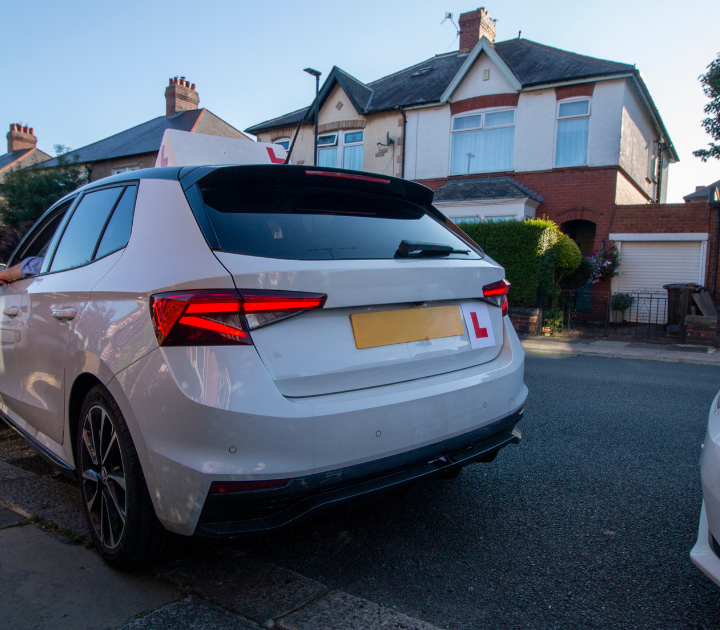
Fitted to the front and back of your car.
Clean Interior
Your car must be clean and tidy for the examiner to get in. Make sure you empty the rubbish out of the door pockets, cup holders and footwells.
Road Ready
Clean mirrors, working lights, no warning lights on dash, legal and well inflated tyres – the examiner will check.
Now you’re ready to set off for your driving test!
Top Tip: You may find it useful to go for one last practice run with your driving instructor before you head to the test centre. It’s a great way to warm up and refresh your memory for those trickier manoeuvres! It’s worth having a discussion with your instructor in advance to see if you can book an extra slot – even if it’s just to sit in the car for a pep talk before you go in!
At The Test Centre
When you arrive at the test centre, you will park your car in one of the allocated bays and head inside. Make sure you arrive ten minutes early, so you have plenty of time to orientate yourself, take some deep breaths and go for one last nervous bathroom trip before you start!
When your DVSA examiner is ready, they will come out and call your name. Head over and hand them your Theory Test Certificate and Provisional Licence (if you have them). They will make a note of your licence details and you will sign a few forms to acknowledge the information you have provided is correct. They will then give you a run-down of how the test will go. This is the point where you can request whether your instructor comes along and sits in the back of the car during your test. Once you’re happy, follow your examiner outside, ready for the test to begin!
Eyesight Check
Before you even hop in the driver’s seat, the test has begun. To make sure you are road safe and ready to drive, the examiner will start with an eyesight check. They will ask you to read a number plate whilst standing 20 metres away – fail this, and your test ends there. If you wear glasses or contact lenses, even if just occasionally, and if you think they will help, wear them! You won’t be penalised for wearing visual aids, but you will be penalised for failing the check!
Pre-Driving Test Vehicle Check
If you are taking the test in your own car, this is where your examiner will check if your car is road worthy and if it is safe to drive for the test.
You should be well acquainted with “Show me, tell me” questions by now. The examiner will ask you two types of questions throughout the test – “show me” questions, and “tell me” questions. To warm you up nicely, they will always start with a “tell me” safety check question before you set off on your drive. The “show me” question tests your multitasking, and you will be asked whilst driving. This is to show you can safely operate the car’s features whilst driving. Don’t worry if you get flustered when answering these, if you get them wrong it’s only a minor driving fault.
This is the moment you have been training for; it’s time to show the examiner that you are able to safely, independently drive! You will take one of the designated test routes. Hopefully you will have practised some similar routes with your instructor during your lessons. Don’t worry if you haven’t, the whole point is that you should be ready to drive on any road. Although places may feel unfamiliar, the scenarios and manoeuvres are all the same!
Independent Driving Section
Before you set off, your examiner will tell you whether you will be following directions from a sat nav, following traffic signs, or a combination of the two. You will need to independently drive for 20-35 minutes following whichever guidance the examiner chooses. If they choose sat nav directions, they will set up the sat nav for you – you can’t bring your own.
If you are following traffic signs and cannot see one, e.g. there is a tree obscuring it, the examiner will give you directions until you can see the next sign. They will usually ask if you can see the sign they are referring to, so you can let them know if you can’t see it.
Top Tip – you will not be penalised for missing an exit or taking a wrong turn, as long as you continue driving in a safe manner.
Examiner Led Driving Section
During the non-independent driving part of the test, your examiner will give you directions as you are driving – similar to your driving lessons.
Driving Test Manoeuvres
Your examiner will ask you to perform a manoeuvre of their choice at some point within your test. There are a range of manoeuvres they can choose from, including parallel parking, bay parking, pulling over to the right, or pulling over and driving off again. You will typically only be asked to do one of them, but you should be confident with all of them just in case. Besides, you will need use them all once you pass!
Of course, there is also a chance you will have to do the infamous emergency stop. For those who dread it, the good news is that the DVSA recently changed the probability from 1 in 3 tests to 1 in 7 driving tests, so it is less likely but still possible! This means you have a 1 in 7 chance that your test will include this manoeuvre. Make sure you familiarise yourself with the procedure and practice it thoroughly with your driving instructor. Your examiner will tell you when they expect you to do the emergency stop and will only ask you to do so when it is safe. They will raise their hand when they want you do to it, just take a deep breath and do exactly what you have practiced.
Back To The Test Centre
You will complete roughly 35-40 minutes of driving altogether, starting with examiner led directions, and finishing with around 20 minutes of independent driving. Eventually, the route you are directed on will start to head back to the test centre.
When you arrive back at the test centre, you will be asked to park the car in one of the designated bays. The instructor will spend a couple of minutes filling out the last of their forms and will total up any faults that you incurred. They will then let you know whether you passed or failed your test, and will ask if you’d like to run through where you picked up any faults. If your instructor chose to sit in the back of your car, this is a good time to go over any faults, if you did fail. You can spend extra time working on these in your lessons to get you ready for your next attempt at passing your test.
Heading Home
Whatever your test results are, it is not recommended that you drive home from the test centre. This has nothing to do with your driving, but you will be busy processing what happened on the test and may be distracted when driving.
If you have learner driving insurance and you passed your test, you will no longer be insured to drive home. You must update your insurance to full UK driving insurance before you set off. Many learners find it easier to be driven home so they can sort this out in their own time. If you decide you’ve done enough driving for the day, your instructor can drive you home. If you took the test in your own car, your learner driver supervisor can drive you home.
The Results
If you have passed your test, congratulations! Before you head out for your first independent drive, check you have the correct insurance policy. If you had learner drivers insurance, you must update this to UK full driver insurance as soon as you pass. Your learner insurance will be void, and you will no longer be insured to drive. Not sure what to do when you pass? Here’s a handy checklist of all the things you need to consider before hitting the road again!
If you failed your driving test, don’t despair. It is good experience either way, and this way you will be able to learn from your mistakes. The good news is that the examiner will have noted all the faults you made during your test, so you know exactly where you went wrong and can work on that. If you have been doing extra practice in your own car, now is a good time to check your learner driver insurance policy and extend it if necessary. Book in some extra lessons with your instructor and schedule your next test when you feel ready.
There’s An App For That!
To help you feel most prepared for your driving test, if you haven’t already, check out a learner driving support app such as RoadHow. They are full of useful guides and tips for approaching even the most challenging scenarios like roundabouts and junctions, so you can practice even when you aren’t behind the wheel! RoadHow has lots of useful features for new drivers too, so it’s worth investigating even if you’ve passed your test.
Conclusion
Now you know exactly what to expect on your practical driving test, you can approach it with confidence and let your skills shine!
Sign up today for exclusive offers, practical guidance, driving tips, and more!
FAQ’s
Commonly asked questions regarding taking your practical driving test
Yes, you can, depending on the make/model. You will need to make certain adjustments, such as an additional rear view mirror and have L Plates on your vehicle for the duration of the drive. For the full list of criteria and requirements, head over to the DVLA website.
Yes, you are allowed your instructor to accompany you on your practical driving test. They will need to sit in the back of the vehicle for the duration of the test. You may find this useful for moral support, and if you fail your test, they will be able to know exactly what faults you picked up and need to practice more of. Before your test begins, your examiner will ask if you would like your instructor to accompany you, and you can let them know then.
If you make a mistake on your driving test, these are called faults. There are three types of faults:
Dangerous Fault – this involves actual danger to you, the examiner, the public or property
Serious Fault – something potentially dangerous
Driving Fault – this is not potentially dangerous, but if you keep making the same fault, it could become a serious fault
You’ll fail your driving test if you make:
More than 15 driving faults (sometimes called ‘minors’)
A serious or dangerous fault (sometimes called ‘majors’)
If you make any faults throughout your test, the examiner will make a note of these and tell you at the end. If you make a Dangerous Fault and the examiner has to intervene, the test may end early.
You will have to book another test and pay again. You must choose a date at least 10 working days in the future.
There is no legal limit on the number of times you can sit the UK driving test. You can retake it as many times as necessary, paying the fee each time.
No, you do not need to retake your theory test as long as your certificate is still in date. A theory test certificate is valid for two years, if yours has expired then you need to retake it, otherwise you are ready to rebook your practical test.
If you believe the examiner’s conduct was inappropriate, you can raise a complaint and the DVSA will investigate, however you cannot appeal a test result just because you disagree with the faults recorded.